Introduction
Headaches are among the most common medical complaints, affecting millions of people worldwide. While many headaches are mild and short-lived, some can be intense, recurring, and disabling. Three of the most frequently confused types are tension headaches, migraines, and cluster headaches.
Although they share the common symptom of head pain, their causes, patterns, and associated symptoms differ greatly. Correctly identifying which type you’re experiencing is essential for effective treatment and prevention. This guide explores how to tell them apart — based on location, pain quality, triggers, duration, and associated signs.
Understanding the Three Main Types of Headaches
Before comparing them in detail, let’s briefly define each type.
1. Tension Headache
The most common type of headache, tension headaches are typically mild to moderate, caused by muscle tightness, stress, or fatigue.
2. Migraine
Migraines are neurological in origin — a complex interaction between the brain, blood vessels, and nerves — often accompanied by nausea, light sensitivity, and throbbing pain.
3. Cluster Headache
Cluster headaches are rare but extremely painful, often called “suicide headaches” because of their intensity. They occur in cyclical patterns (clusters) over weeks or months, then may disappear for long periods.
1. Tension Headache
Characteristics
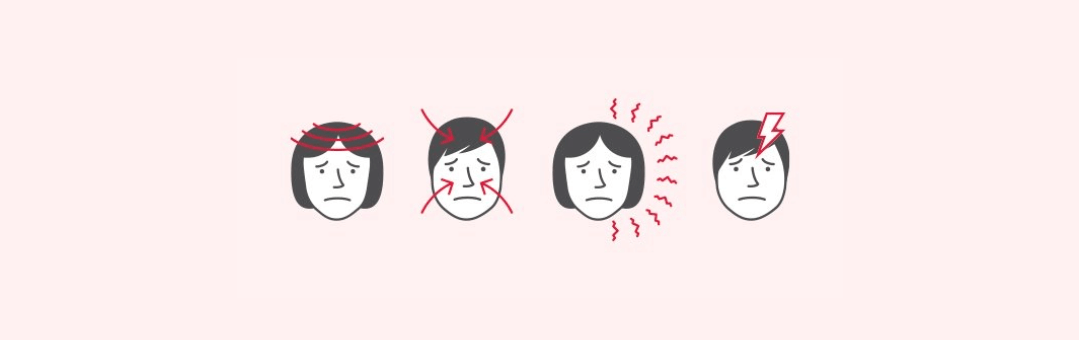
- Pain type: Dull, aching, and pressure-like (often described as a tight band around the head).
- Location: Usually affects both sides of the head, often the forehead, temples, or back of the neck.
- Intensity: Mild to moderate; doesn’t usually interfere with daily activities.
- Duration: From 30 minutes to several hours, sometimes lasting days.
Common Triggers
- Emotional stress, anxiety, or fatigue
- Poor posture or long screen time
- Eye strain
- Skipping meals or dehydration
- Lack of sleep
Associated Symptoms
- Tenderness around scalp, neck, or shoulders
- No nausea or vomiting
- Not worsened by physical activity
Relief and Prevention
- Over-the-counter (OTC) pain relievers like paracetamol or ibuprofen
- Stress management, posture correction, adequate hydration
- Regular breaks during work or screen time
2. Migraine
Characteristics
- Pain type: Throbbing, pulsating, or pounding pain
- Location: Typically one-sided, though it may shift sides or affect the whole head
- Intensity: Moderate to severe — can be debilitating
- Duration: 4 to 72 hours if untreated
Phases of a Migraine
- Prodrome (early warning): Fatigue, mood changes, food cravings
- Aura (in some cases): Visual disturbances (flashes, zigzag lines), numbness, or speech problems
- Headache phase: Intense pain with nausea, vomiting, sensitivity to light and sound
- Postdrome: Fatigue, difficulty concentrating, “hungover” feeling
Common Triggers
- Hormonal changes (especially in women)
- Stress or sudden relaxation after stress
- Certain foods (aged cheese, chocolate, caffeine, red wine)
- Bright lights or loud sounds
- Changes in sleep, weather, or routine
Associated Symptoms
- Nausea and/or vomiting
- Sensitivity to light (photophobia) and sound (phonophobia)
- Blurred vision
- Dizziness
Treatment and Prevention
- Acute relief: Triptans, NSAIDs, anti-nausea medication
- Prevention: Beta-blockers, anticonvulsants, CGRP inhibitors (for frequent attacks)
- Lifestyle management: Sleep consistency, hydration, identifying and avoiding triggers
3. Cluster Headache
Characteristics
- Pain type: Excruciating, stabbing, or burning pain
- Location: Strictly one-sided, usually behind or around one eye
- Intensity: Severe — often described as the worst pain imaginable
- Duration: 15 minutes to 3 hours, but may occur several times a day
- Pattern: Occurs in “clusters” (daily attacks for weeks or months), followed by remission
Common Triggers
- Alcohol (especially during cluster periods)
- Strong odors (paint, gasoline, perfume)
- Smoking or high altitudes
- Changes in sleep or circadian rhythm
Associated Symptoms
- Tearing or redness in the affected eye
- Stuffy or runny nose on the same side
- Drooping eyelid or small pupil
- Restlessness or agitation (many people pace during attacks)
Treatment and Prevention
- Acute relief:
- Inhaled 100% oxygen via mask (most effective)
- Triptan injections or nasal sprays (sumatriptan, zolmitriptan)
- Preventive therapy:
- Verapamil (a calcium channel blocker) is most commonly used
- Corticosteroids or nerve stimulation in resistant cases
- Avoid alcohol and nicotine during active cluster periods
Comparison Table: Key Differences
| Feature | Tension Headache | Migraine | Cluster Headache |
| Pain Type | Dull, tight, pressure | Throbbing, pulsating | Sharp, stabbing, burning |
| Location | Both sides, forehead, neck | Usually one-sided | One-sided (eye/temple) |
| Intensity | Mild–moderate | Moderate–severe | Severe–excruciating |
| Duration | 30 min–days | 4–72 hours | 15 min–3 hours (recurring) |
| Associated Symptoms | Muscle tension | Nausea, sensitivity to light/sound | Watery eyes, nasal congestion |
| Aggravated by Activity | No | Yes | No |
| Common Triggers | Stress, fatigue | Hormones, certain foods, stress | Alcohol, sleep disruption |
| Best Acute Treatment | OTC painkillers, rest | Triptans, NSAIDs | Oxygen, triptan injection |
| Preventive Focus | Stress reduction | Trigger management, medication | Circadian control, verapamil |
When to See a Doctor
Seek medical advice if you experience:
- Headaches more than twice a week or that interfere with daily life
- Headaches that wake you at night or worsen with exertion
- New or sudden severe headache (“thunderclap headache“)
- Headache accompanied by vision changes, confusion, weakness, or fever
- No relief from OTC medications or lifestyle changes
Proper diagnosis ensures you receive targeted treatment and rule out serious conditions.
Conclusion
While tension headaches, migraines, and cluster headaches all cause head pain, their underlying mechanisms and symptoms differ greatly.
- Tension headaches are stress-related and mild.
- Migraines are neurological, intense, and often come with sensory disturbances.
- Cluster headaches are the most severe, with distinctive patterns and facial symptoms.
Recognizing the type and trigger of your headache is the first step toward effective management. With proper diagnosis, medication, and lifestyle changes, most people can significantly reduce the frequency and intensity of their headaches — and regain control over their daily lives.
FAQs
1. How can I tell if my headache is a migraine or tension headache?
Migraines are usually one-sided and throbbing with nausea or light sensitivity, while tension headaches feel like a tight band across both sides of the head.
2. Are cluster headaches dangerous?
Cluster headaches aren’t life-threatening, but their intensity can be overwhelming. Immediate medical evaluation and proper treatment are essential.
3. Can stress cause all three types of headaches?
Stress commonly triggers tension headaches and sometimes migraines, but it rarely causes cluster headaches.
4. What’s the fastest relief for cluster headaches?
High-flow oxygen therapy or triptan injections provide the quickest relief.
5. When should I see a doctor for my headaches?
See a doctor if headaches are frequent, severe, accompanied by neurological symptoms, or do not respond to typical treatments.