Introduction
For years, dermatologists believed diet and acne had little connection. Today, a growing body of scientific research shows that certain foods—especially those high in sugar, dairy products, and high-glycemic (fast-digesting) carbohydrates—may influence acne severity.
Food alone doesn’t cause acne, but it can worsen or trigger breakouts in people who are genetically or hormonally prone. Understanding how diet affects skin inflammation, hormones, and oil production can empower you to make choices that support clearer skin.
This article explores the evidence behind the main dietary factors linked to acne and offers practical recommendations.
What Is the Link Between Diet and Acne?
Acne is influenced by four main factors:
- Excess oil production
- Clogged pores
- Bacteria (C. acnes)
- Inflammation
Diet can affect hormones, insulin levels, and inflammation, which play a major role in all four. While no food is universally harmful, certain patterns consistently show stronger links to breakouts.
1. Sugar and Acne: The Insulin Connection
Why Sugar Can Trigger Breakouts
Consuming high amounts of sugary foods causes:
- Rapid spikes in blood sugar
- Increased insulin release
- Higher levels of IGF-1 (insulin-like growth factor)
IGF-1 is a hormone that:
- Increases sebum (oil) production
- Encourages skin cells to clump together, clogging pores
- Promotes inflammation
These effects can worsen both inflammatory acne (red pimples) and comedonal acne (blackheads/whiteheads).
Foods High in Sugar
- Candies and chocolates
- Cakes, pastries, doughnuts
- Soft drinks and energy drinks
- Sweetened cereals
- Processed snacks
Regular high sugar intake is strongly linked to more frequent and severe breakouts in multiple studies.
2. High-Glycemic Foods and Acne: Not Just Sugar
What Makes a Food “High Glycemic”?
High-glycemic index (GI) foods cause quick spikes in blood sugar. These foods digest fast and lead to high insulin and IGF-1 levels—major triggers for acne activity.
Examples include:
- White bread, white rice
- Instant noodles
- Fries and chips
- White pasta
- Breakfast cereals with added sugar
- Sweetened beverages
- Processed snacks
What the Research Says
Several controlled studies found that:
- People who follow a low-glycemic diet have fewer acne lesions.
- Switching from high-GI to low-GI foods can reduce inflammation and oil production.
This is one of the strongest diet-acne links supported by modern research.
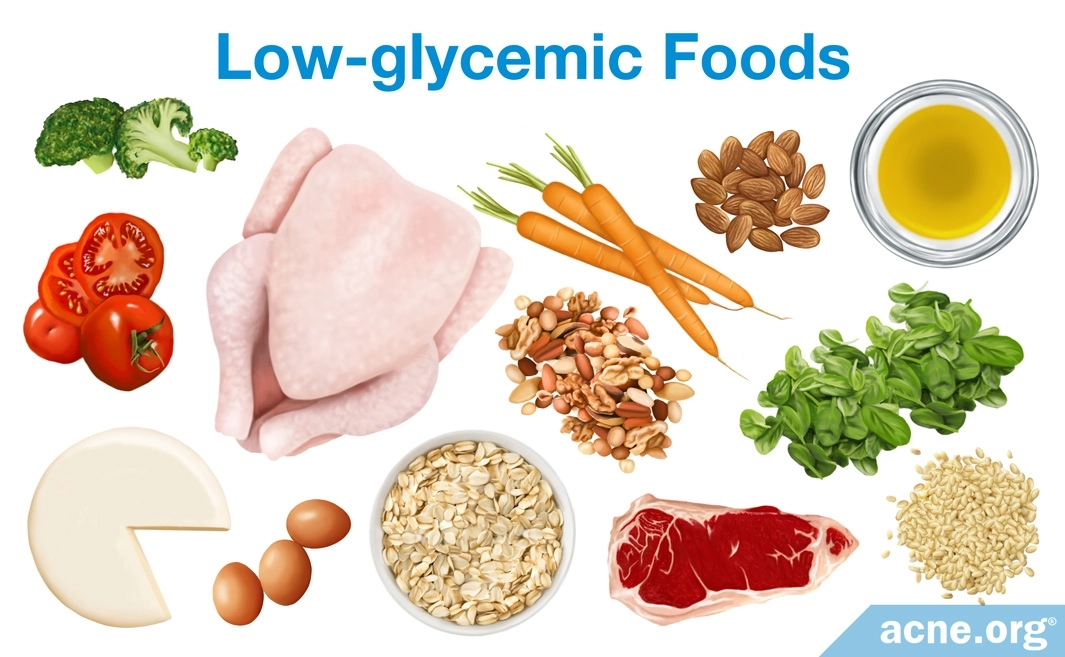
Low-Glycemic Foods for Clearer Skin
- Whole grains: oats, quinoa, barley
- Brown rice
- Vegetables
- Beans and legumes
- Fruits with fiber (berries, apples, pears)
- Nuts and seeds
These foods digest slowly and keep insulin levels steady.
3. Dairy Products and Acne: The Most Debated Trigger
Dairy is one of the most studied—and controversial—dietary acne triggers.
Why Dairy May Worsen Acne
Milk, especially skim milk, contains:
- IGF-1 (promotes oil production)
- Hormones from cows (stimulates androgen activity)
- Whey and casein proteins that increase insulin levels
These hormonal effects can stimulate oil glands and flare breakouts.
What Research Shows
- Skim milk has the strongest link to acne.
- Whole milk has a weaker association.
- Cheese and yogurt show less consistent effects.
- Lactose-free milk still triggers acne in some people, showing hormones—not lactose—are the likely cause.
Who Is Most Affected by Dairy?
- Teens and young adults
- Women with hormonal acne
- Those with jawline, chin, and lower-face breakouts
- People sensitive to hormonal fluctuations
Not everyone reacts to dairy, but those who do often notice clearer skin within 4–6 weeks after reducing intake.
4. Other Foods That May Influence Acne
Whey Protein Supplements
Commonly used for body-building, whey protein:
- Raises insulin levels
- Increases IGF-1
- Frequently triggers acne on the face, chest, and back
Switching to plant-based proteins (pea, soy, hemp, brown rice) often improves breakouts.
Fast Food
Burgers, fries, fried chicken, and milkshakes contain:
- High glycemic carbs
- Dairy
- Saturated fats
- Additives that increase inflammation
Studies link a western-style diet to higher acne prevalence.
Chocolate
Chocolate itself isn’t proven to cause acne, but:
- Milk chocolate has dairy + sugar
- High-sugar blends can worsen inflammation
Dark chocolate (70%+) has fewer negative effects.
5. Anti-Inflammatory Foods That Support Clear Skin
Omega-3 Fatty Acids
Helps reduce inflammation and oiliness. Sources include:
- Salmon
- Sardines
- Walnuts
- Chia seeds
- Flaxseeds
Probiotic-Rich Foods
Support gut health, which influences skin inflammation:
- Yogurt (if tolerated)
- Kefir
- Kimchi
- Sauerkraut
- Kombucha
Antioxidant-Rich Foods
Protect skin from inflammation and oxidative stress:
- Berries
- Green leafy vegetables
- Tomatoes
- Green tea
Zinc and Vitamin A-Rich Foods
These nutrients help regulate oil production:
- Pumpkin seeds
- Lentils
- Spinach
- Sweet potatoes
How to Figure Out Your Personal Acne Triggers
Everyone reacts differently. To identify food-related breakouts:
1. Elimination Method (4–6 Weeks)
Cut out:
- Dairy
- High sugar foods
- High-GI carbs
Track skin changes weekly.
2. Reintroduction Phase
Bring back one category at a time and observe reactions.
3. Keep a Skin + Diet Diary
Helps identify hidden triggers (like whey protein, certain chocolates, or flavored milk).
4. Consult a Dermatologist or Nutritionist
Especially if acne is severe or your diet is heavily restricted.
Practical Diet Tips for Acne Control
- Choose whole grains over refined carbs.
- Replace skim milk with almond, soy, or oat milk.
- Limit sweets to occasional treats.
- Avoid whey protein supplements.
- Eat more fresh produce and antioxidants.
- Reduce fast food and packaged snacks.
- Drink plenty of water.
Small, consistent changes often lead to clearer, more stable skin.
Conclusion
While diet does not directly cause acne, strong evidence shows that high-glycemic foods, excessive sugar, and certain dairy products—especially skim milk—can worsen acne in susceptible individuals. These foods influence hormones like insulin and IGF-1, leading to increased oil production and inflammation.
By reducing these dietary triggers and focusing on whole, low-glycemic, anti-inflammatory foods, many people see improvements in their acne within weeks. Because every skin type is unique, a personalized, mindful approach works best. Diet adjustments can complement medical treatments and help achieve long-lasting, clearer skin.
FAQs
1. Does dairy cause acne?
Not for everyone, but skim milk has the strongest link to breakouts.
2. Are high-glycemic foods bad for acne?
Yes, they spike insulin and can worsen oily skin and inflammation.
3. How long does a diet take to affect acne?
Typically 4–8 weeks to see noticeable improvements.
4. Is chocolate bad for acne?
Milk chocolate may worsen acne due to sugar and dairy; dark chocolate is less problematic.
5. Can cutting sugar clear acne completely?
It may improve acne significantly, but most people need a combined approach (topicals + lifestyle).