
Introduction
Snoring is a common sleep concern that can disturb both the snorer and their bed partner. Many people look for quick solutions to reduce snoring, and over-the-counter products like nasal strips, nasal dilators, and nasal sprays are popular choices. These products aim to improve airflow through the nose and reduce vibrations in the throat that cause snoring. But do they actually work, and who benefits most from them?
This article explores the science behind these nasal aids, how they function, their effectiveness, and how to incorporate them into a comprehensive snoring management plan.
Understanding Snoring and Nasal Resistance
Snoring occurs when airflow through the airway becomes partially obstructed, causing soft tissues to vibrate. While many snoring solutions focus on the throat and tongue, nasal airflow plays a critical role:
- Nasal congestion increases airway resistance
- Reduced airflow causes the throat tissues to vibrate more
- Nasal obstruction worsens supine-position snoring
By improving nasal airflow, nasal devices can reduce snoring intensity—though results vary depending on the underlying cause.
1. Nasal Strips
How Nasal Strips Work
Nasal strips are adhesive bands applied externally across the bridge of the nose. They mechanically lift the sides of the nose, widening the nostrils and increasing airflow.
Benefits
- Simple and non-invasive
- Can reduce snoring caused by mild nasal congestion
- Immediate results for some users
Limitations
- Only effective for nasal obstruction-related snoring
- Less effective for throat or tongue-based snoring
- Effects are temporary—only work while applied
Who Benefits Most
- People with congested nasal passages
- Snorers whose nasal airflow is the main issue
- Mild seasonal allergy sufferers
2. Nasal Dilators
How Nasal Dilators Work
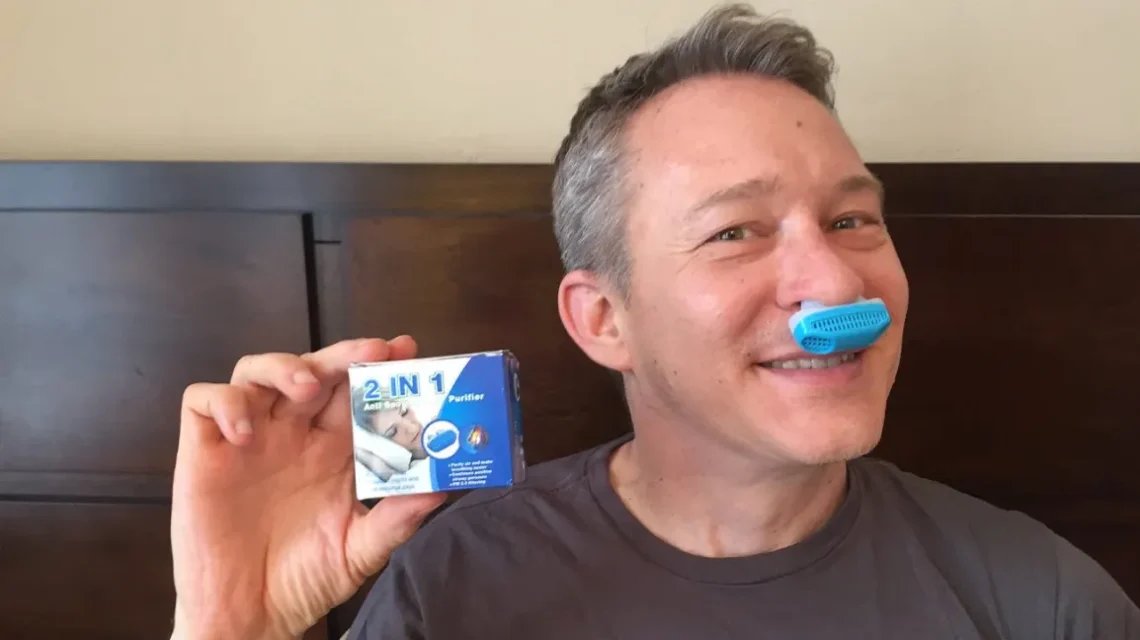
Nasal dilators are devices inserted into the nostrils to hold them open during sleep. They can be soft, flexible, and reusable.
Benefits
- Improve airflow more directly than external strips
- Reduce snoring for people with narrow nostrils or nasal valve collapse
- Comfortable and reusable options are available
Limitations
- Can feel intrusive initially
- Not effective if throat collapse or obesity contributes to snoring
- Must be sized properly for comfort
Who Benefits Most
- People with structural nasal issues
- Mild-to-moderate snorers with nasal airway restriction
3. Nasal Sprays
Types of Nasal Sprays
- Decongestant sprays (oxymetazoline, phenylephrine)
- Saline sprays
- Steroid nasal sprays (fluticasone, mometasone)
How They Work
- Decongestants shrink swollen nasal tissues
- Saline sprays clear mucus and hydrate nasal passages
- Steroids reduce chronic inflammation from allergies
Benefits
- Can temporarily relieve nasal obstruction
- Useful for allergy-related congestion
- Can improve sleep quality when nasal blockage is the primary issue
Limitations
- Decongestants should not be used longer than 3–5 days to avoid rebound congestion
- Steroid sprays require consistent daily use for effectiveness
- Minimal effect on snoring caused by throat collapse
Who Benefits Most
- Snorers with allergic rhinitis
- Congestion from colds or sinus issues
- Mild nasal obstruction contributing to snoring
Combining Nasal Solutions with Other Strategies
Nasal aids work best as part of a multi-faceted approach to snoring:
- Positional therapy: Sleeping on the side reduces throat collapse
- Weight management: Reduces neck fat and airway pressure
- Lifestyle changes: Limiting alcohol and sedatives before bed
- Medical treatments: CPAP or oral appliances for sleep apnea
Using nasal strips or sprays alone rarely solves snoring caused by throat tissue collapse, obesity, or sleep apnea.
Tips for Using Nasal Devices Effectively
- Choose the right type for your snoring cause (strip, dilator, or spray)
- Use consistent nightly application for maximum effect
- Combine with humidifier or saline rinse if nasal dryness occurs
- Replace adhesive strips or reusable dilators according to instructions
- Monitor for irritation or discomfort, and stop use if persistent
Conclusion
Nasal strips, dilators, and sprays can be effective tools for reducing snoring when nasal obstruction is the primary cause. They improve airflow, reduce vibration, and may lead to quieter nights for both the snorer and their partner. However, their effectiveness is limited for snoring caused by throat collapse, obesity, or sleep apnea. Incorporating nasal aids into a broader strategy—including positional therapy, lifestyle changes, and medical evaluation—offers the best chance for restful, quiet sleep.
FAQs
1. Do nasal strips completely stop snoring?
Only if snoring is caused primarily by nasal blockage. They usually reduce, not eliminate, snoring.
2. Are nasal dilators uncomfortable?
Some users experience initial discomfort, but proper sizing and adjustment improve tolerance.
3. Can I use nasal sprays every night?
Saline sprays are safe nightly. Decongestants should be limited to 3–5 days; steroid sprays require daily use for chronic allergies.
4. Will these devices help sleep apnea?
Nasal aids may improve airflow but are not sufficient to treat moderate or severe sleep apnea.
5. Can combining nasal strips with positional therapy help more? Yes—combining side-sleeping and nasal devices often produces better results than using either alone.